

 This article opens the series “When International Expansion Becomes a Costly Lesson.” It examines B2B software companies that invested heavily in entering new markets and fell well short of their expectations.
The aim is to understand the decisions and the assumptions behind them so others can learn from the experience. We start with publicly available information and distinguish documented facts from possible explanations.
Background
 The market for ERP systems for small and midsize organisations grew rapidly in the 1990s. Cheaper minicomputers and PC networks put these systems within reach of more companies. Demand surged from 1997 to 1999 as companies invested in ERP software to avoid problems at the turn of the millennium. After 2000, demand fell sharply.
Channel strategy matters in this account because it was crucial to ERP suppliers serving midsize and large companies at the time. The software itself accounted for only about 10% of what the customer paid for a complete solution. The other 90% went to solution design, customisation, configuration, project management, training and other consulting services. Vendors that handled sales and delivery themselves needed far more staff than those that relied on partners. They could also book considerably more revenue.
From European success to failure in the United States
In the mid-1990s, Swedish ERP vendor Intentia expanded its international operations. It set up its own organisation in the United States and at the same time decided to move Movex, which ran on IBM’s AS/400 platform, to a Java-based architecture. Its 1996 stock market listing raised capital for both initiatives. When the ERP market stalled after the turn of the millennium, those large investments became a serious financial burden.
When Intentia and U.S. company Lawson Software announced the deal in June 2005, the offer was worth around USD 480 million based on Lawson’s share price at the time. Lawson completed the acquisition on 25 April 2006 and reported a purchase price of USD 460.9 million, including transaction costs. By comparison, Microsoft paid USD 1.45 billion for the smaller Navision in 2002. In 2011, Infor acquired Lawson.
Timeline
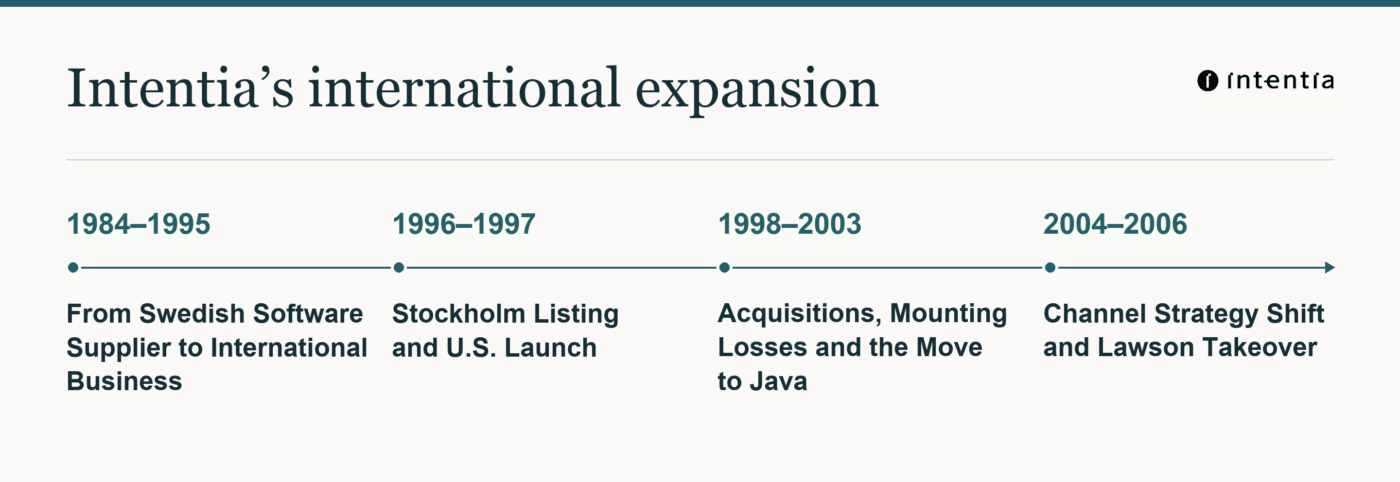 1984–1995: From Swedish software vendor to international business
Intentia was founded in Linköping, Sweden, in 1984. It gained access to the business software later known as Movex when it acquired Entra Data in 1991. The system had its roots in Norway, and Intentia continued to develop it after the acquisition. Movex became the foundation of the company’s international growth in the 1990s. Intentia entered new markets in part through local business partners, some of which it later acquired and continued to operate as subsidiaries. This was an established approach in the ERP industry, also used by companies such as Navision.
1996–1997: Stockholm listing and U.S. launch
In November 1996, Intentia listed on the Stockholm stock exchange. The offering combined a new share issue that raised capital for the company with a sale of existing shares. The total transaction was worth SEK 385 million. The listing provided a financial base for further international expansion and product development. Around July of that year, Intentia set up its U.S. operation in Rosemont, Illinois.
As in Europe, the company targeted midsize industrial businesses, including food, apparel and manufacturing companies.
1998–2003: Acquisitions, mounting losses and the move to Java
In 1997, as noted above, Intentia decided to develop Movex on a Java-based architecture to reduce its dependence on IBM’s AS/400 and reach a larger market. Movex Next Generation was introduced around the turn of 1998–1999. According to the company, the full Java-based application suite was released in 2001. The transition coincided with the build-out of its U.S. business.
Intentia made several acquisitions to expand its U.S. presence. The group grew, but investments in the United States and Japan strained its finances. In 2000, group revenue was about SEK 3.2 billion, with an after-tax loss of about SEK 344 million.
The U.S. operation nevertheless continued to grow, reaching 410 employees, even as management noted that the turn of the millennium had dampened customer investment. Between the stock market listing and 2001, Intentia raised a further SEK 2 billion or so through several share issues.
2004–2006: Channel strategy shift and Lawson takeover
In July 2004, Intentia announced a change in channel strategy. It planned to recruit partners for both sales and implementation. Giving partners a larger role was probably also intended to lower costs after several difficult financial years. The change came too late. The merger with Lawson Software was announced in 2005, and the takeover was completed in April 2006. Lawson was strong in North America, while Intentia’s strongest position was in Europe. The U.S. operations accounted for 6.5% of group revenue in 2005. By then, Intentia had accumulated losses of about SEK 1.6 billion.
Why did the expansion fail?
The sequence of events raises a question. Why did Intentia see so little return on an investment running into billions of kronor?
A U.S. market with strong local competitors
Intentia faced a different competitive landscape in North America than it did in Europe. Alongside the large international ERP vendors were U.S. companies that had specialised for years in software for midsize industrial businesses.
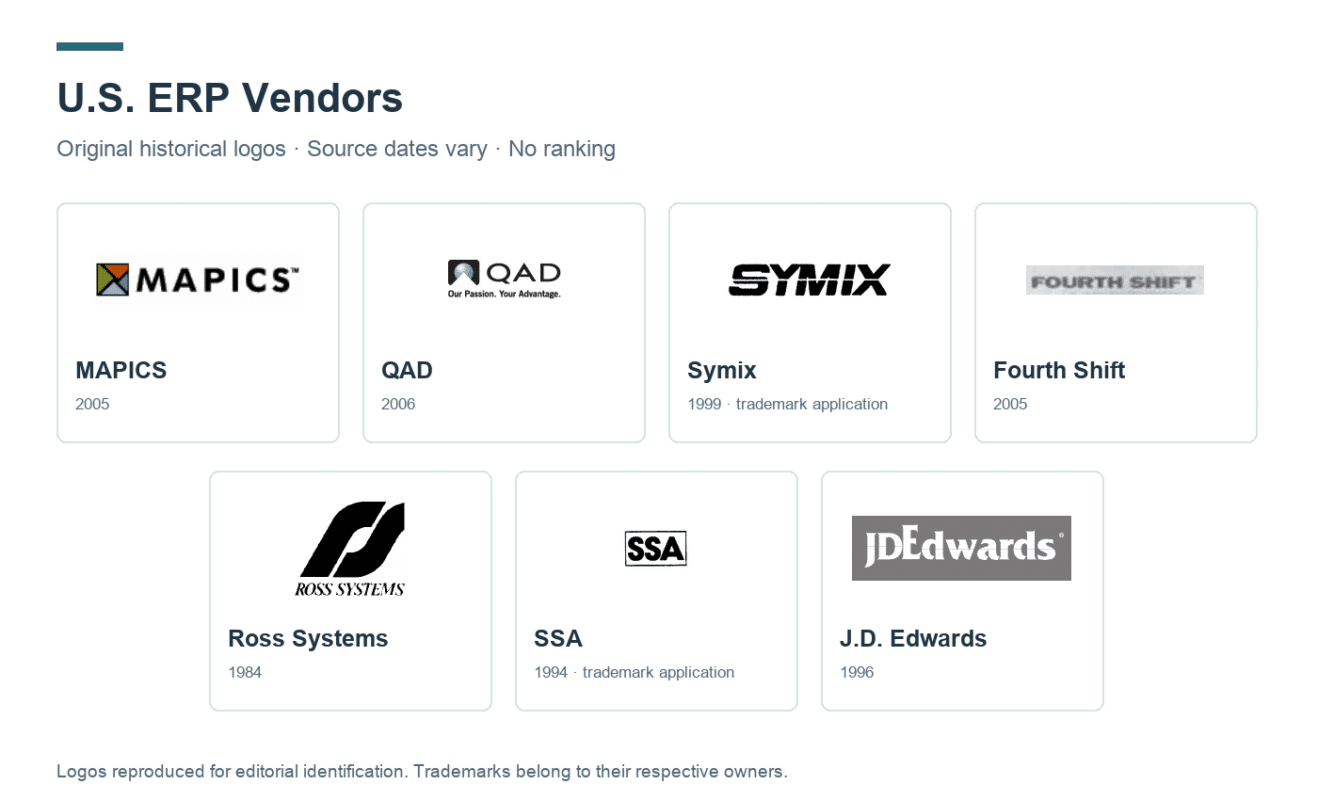 They included MAPICS, QAD, Symix, Fourth Shift, Ross Systems, SSA and J.D. Edwards. Several had substantial customer bases, extensive industry experience, established partners and teams for sales, implementation and support.
MAPICS is a case in point. In 1998, it had about 5,700 customers and specialised in ERP systems for industrial companies with annual revenues of USD 20 million to 500 million. A substantial share of its customers used IBM’s AS/400 platform.
Intentia therefore had to win customers in a market where competitors already had strong local references and established relationships.
Was the AS/400 market too narrow?
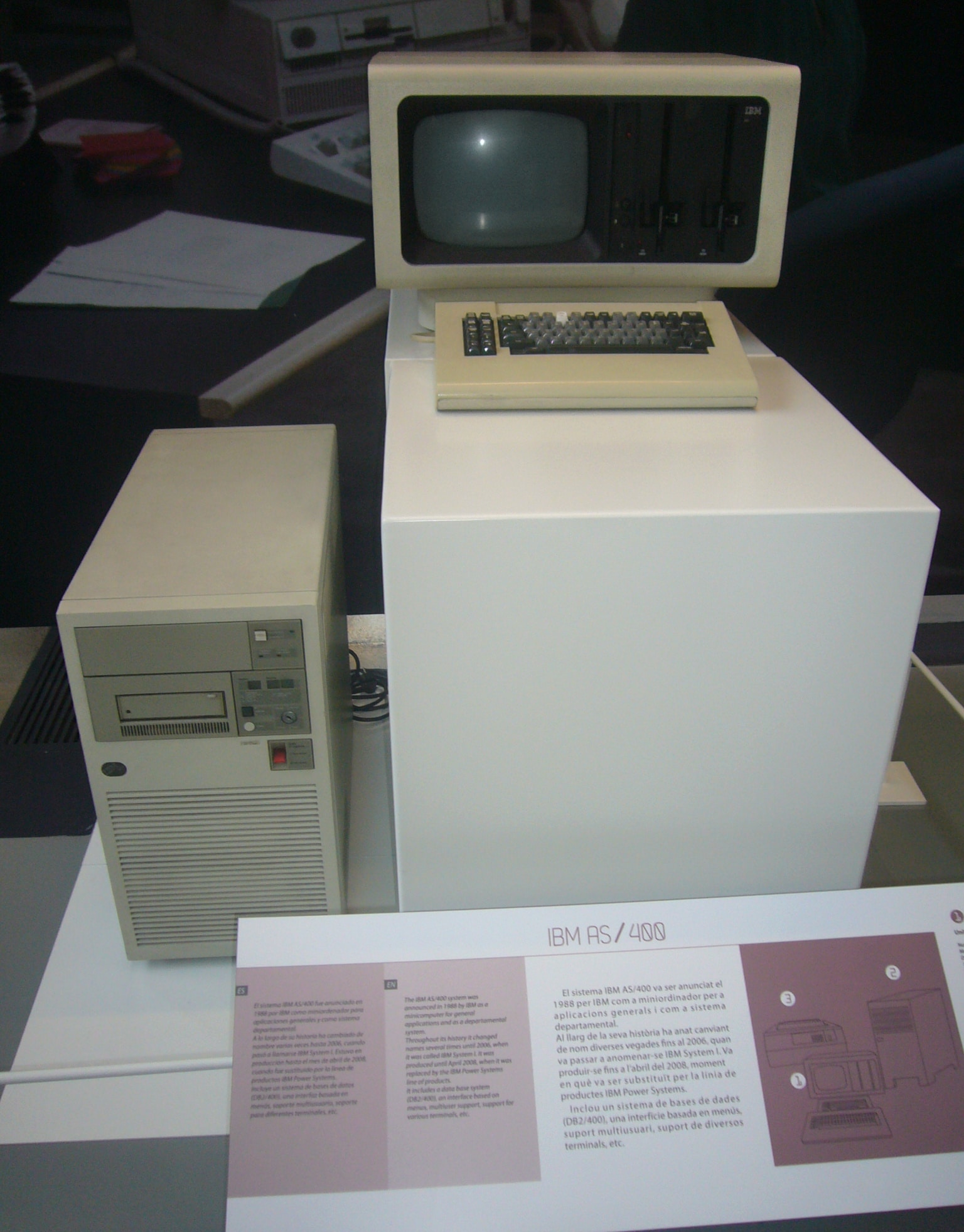
IBM AS/400 9404-B10
Intentia wanted Movex to run independently of the AS/400 so it could reach more customers.
But how much of a constraint was the AS/400 platform in North America?
According to IBM figures from the period, Europe accounted for around 60% of worldwide AS/400 unit sales in about 1993, and the United States for around 30%. That made the U.S. a substantial AS/400 market, though only half the size of Europe’s. Vendors such as MAPICS and J.D. Edwards already had a strong position there.
Established partners served many customers. Intentia had to find a place in that network or find another way to reach customers. In the United States, it chose the latter.
New technology may have created another barrier
Making Movex independent of IBM’s AS/400 platform was intended to open up a larger market. The transition may also have made the product harder to sell.
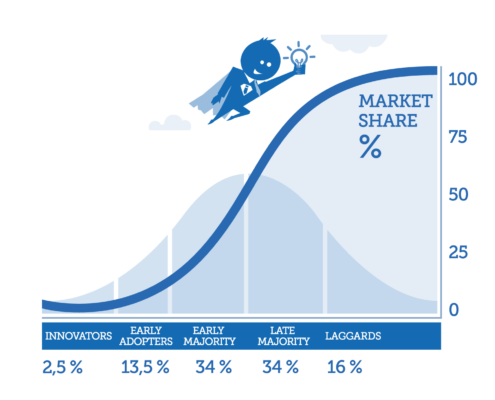 Companies investing in an ERP system know they are taking a substantial risk. The system supports business-critical processes, so customers generally want to see a track record at comparable installations before committing. The principles of Diffusion of Innovation suggest that only a small part of the market is willing to adopt new technology before it has been thoroughly tested.
The announcement of Movex Next Generation may therefore have affected sales of the existing RPG version. Why invest in a system whose successor has already been announced but has yet to prove itself?
Intentia understood the risks of the transition. In December 1998, Ed Koepfler, who headed Intentia’s U.S. business, explained that the company would offer both versions in parallel and keep developing the RPG version to protect customers’ investments.
We have no evidence that customers actually delayed their purchases. Intentia may have faced a situation in which the old version was seen as being on its way out while the new version had yet to prove its worth.
Building a direct sales and delivery operation was expensive
 Why did Intentia choose to handle sales and delivery itself? One possible explanation is that this was its established business model. The incumbent U.S. AS/400 partners also had strong relationships with local ERP vendors. Building a partner channel could therefore be expected to take time, with no guarantee of success. An operation of its own gave Intentia more control but required substantial investment before it had built a customer base.
In hindsight, Intentia’s management expected the market to embrace the product much sooner. We do not know what that optimism was based on. The rule of thumb that you invest in year one, break even in year two and recoup your investment in year three does not hold in the ERP industry. It still doesn’t today.
The turn of the millennium changed demand
All ERP vendors saw demand slow in the years after the turn of the millennium. Intentia was hit particularly hard. It had invested heavily in building a U.S. operation and had committed to developing and maintaining Movex on two technology platforms.
This may explain some of Intentia’s financial troubles after 2000. It leaves open the question of why the company struggled to break through while demand was still exceptionally strong.
What was Intentia’s decisive event?
As I discuss in my forthcoming book Building Successful Business Models, exceptionally fast growth always requires a change in the market that a company is particularly well positioned to exploit. I call this the decisive event. It gives customers an unusually strong reason to choose your product.
 An example: The launch of Windows 95 was a decisive event for a small Danish ERP vendor, Navision Software. Its product, Financials, was ready and certified for Microsoft’s launch on 24 August 1995. Over the preceding ten years, Navision had built a partner channel in Denmark, the United States and Germany. Both the product and the distribution network were in place when demand took off.
For more than a year, Navision Financials was the only ERP product certified for Windows 95. Navision used the unexpectedly rapid adoption of Windows 95 to enter new markets.
The turn of the millennium was a decisive event that created exceptional demand for ERP systems, yet it gave no single vendor a particular advantage.
What was Intentia’s decisive event in the United States?
I have been unable to identify one.
The established U.S. vendors were far better placed to benefit from demand in the run-up to the turn of the millennium.
Should management have known better?
 Hindsight comes easily. The ERP market grew rapidly in the second half of the 1990s, and many vendors acted on their plans to expand internationally. So why did Intentia spend so heavily to build a U.S. operation when the U.S. AS/400 market, measured in units sold, was about half the size of Europe’s? Why not invest where the foundations were already in place?
What were management’s expectations based on? Why did they think they could win U.S. customers quickly? Did their competitors’ international activity put pressure on them to expand faster?
We do not know what considerations drove those decisions. Intentia’s 1996 listing prospectus might shed more light on management’s expectations. The central question is whether the size and pace of the investment were in proportion to the demand the company could reasonably expect.
What can we learn from Intentia’s experience?
Intentia’s U.S. expansion was costly. In 2005, its U.S. operations generated external revenue of SEK 193.7 million, or 6.5% of group revenue. They did, however, earn an operating profit of SEK 23.1 million that year. The annual accounts do not show whether the earlier investments were recouped.
It may be going too far to say the U.S. expansion alone led to Lawson’s takeover. But the case shows the risk of building a large organisation in a new market before you have a sound understanding of where your competitive advantage lies. A competitive software product does not necessarily give you a competitive business model in a new market.
Can you contribute to the story?
 I’d like to hear from people who were directly involved in Intentia’s U.S. expansion, worked for its partners or competitors, or have other insights into what happened. Why did Intentia want to enter the United States? What was management’s optimism based on? Which challenges had the company underestimated? Could it have changed course earlier?
I’d also be interested to hear about other B2B software companies that have had similar experiences with international expansion.
You’re welcome to contact me on LinkedIn, including if you’d prefer a confidential conversation. I won’t publish information from these conversations without agreement. New information may also lead me to add to or correct the articles.

